Cover image: rhythmic attention
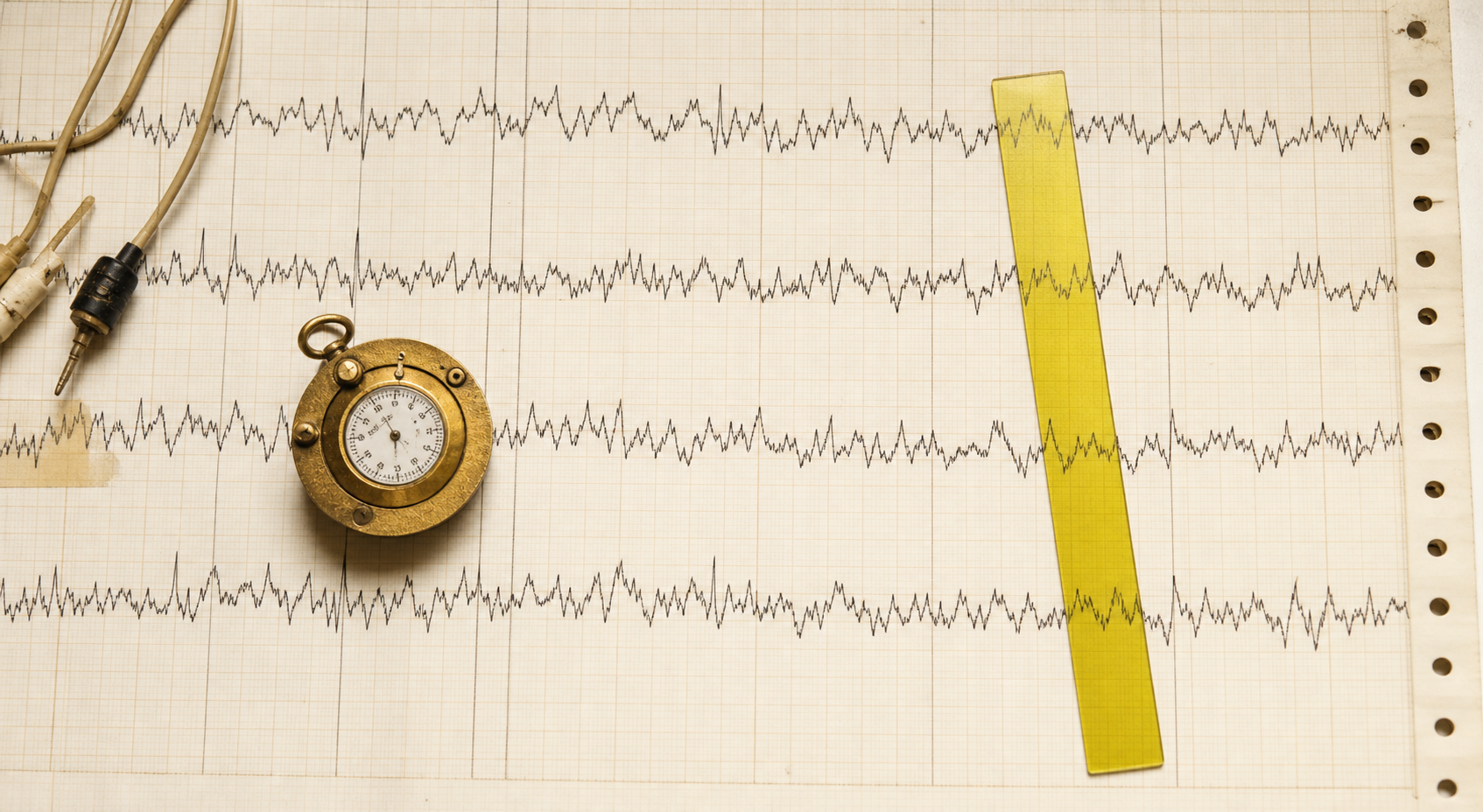
We often imagine attention as a stage spotlight: wherever it falls, information becomes clear. EEG and intracranial recordings suggest a better metaphor may be breathing—attention opens, closes, and reallocates in a rapid rhythm.
How the brain samples a continuous world
Visual input is continuous, yet neural processing is periodic. Around 7–12 Hz, cortical excitability rises and falls: some phases favor new evidence, while others protect the current representation. What feels continuous may be a smooth reconstruction from discrete samples.
Stable focus need not come from a stable neural state; it may emerge from rapid, orderly switching.
Inhibition is selection, not silence
Among competing stimuli, inhibitory circuits do more than erase distraction. They tune the windows in which information enters computation, allowing different objects to take turns. This helps explain why performance varies with stimulus timing.
- Rhythms provide temporal structure, not a single command.
- The unit of attention may be a cycle rather than a location.
- Subjective continuity can arise from discrete neural events.